
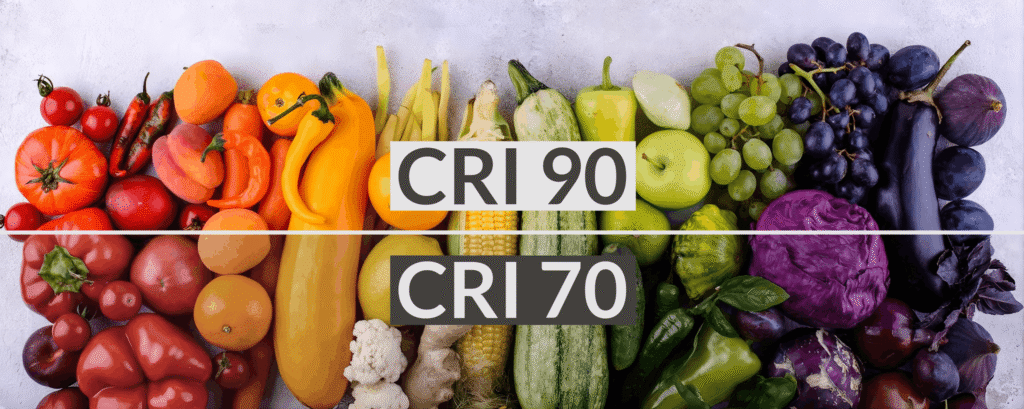
When specifying LED lighting, wattage and lumens get the most attention. However, the Color Rendering Index (CRI) determines if illuminated colors actually look correct.
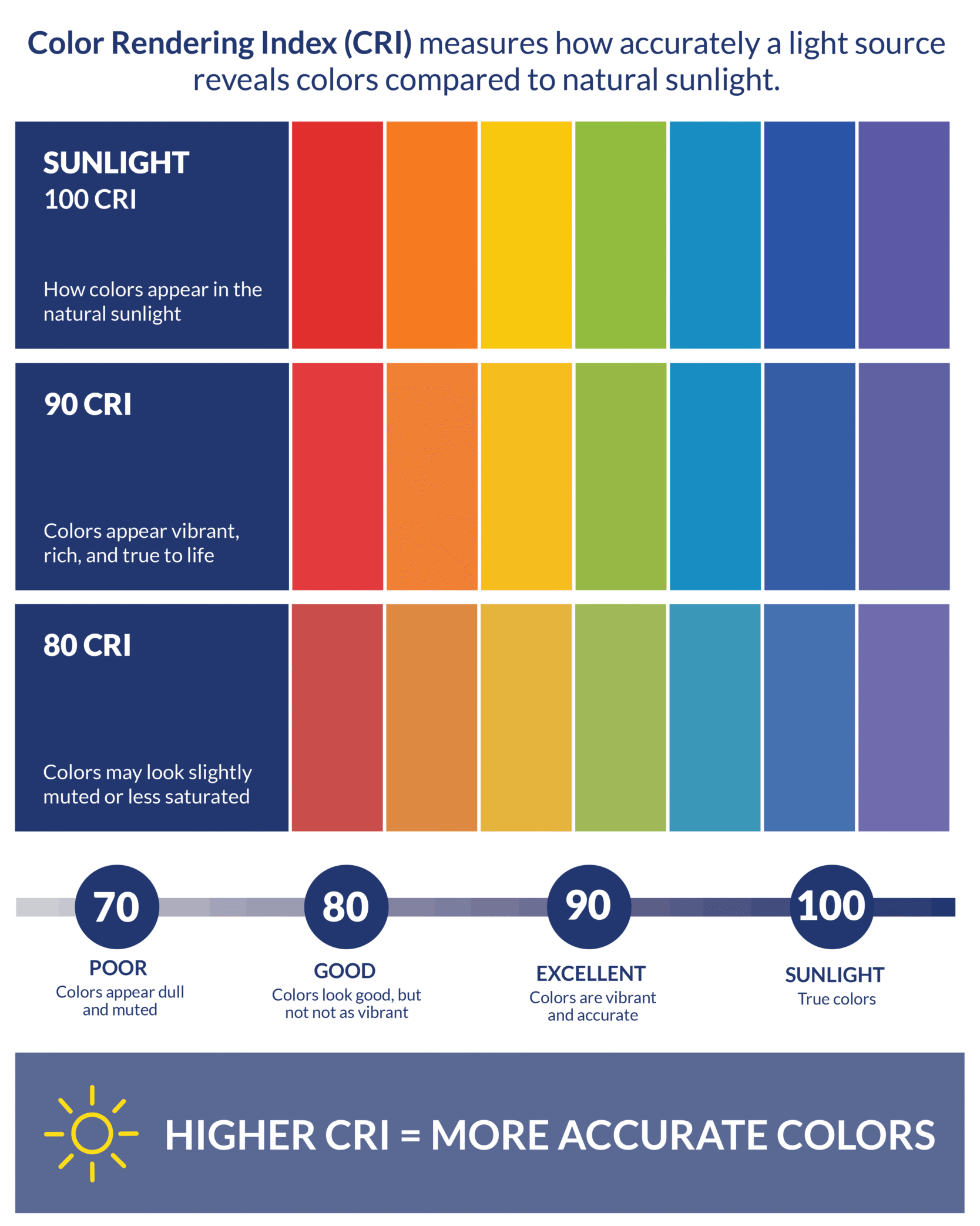
CRI is a 0-100 scale measuring how accurately a light source reveals true colors compared to natural sunlight. It is entirely different from Correlated Color Temperature (CCT), which measures visual warmth. A CRI of 100 perfectly matches sunlight. Lower scores flatten colors, causing reds in particular to look dull.
Sunlight possesses a continuous visible spectrum. Low-quality LEDs often have spectral gaps that prevent accurate color reflection. Higher-CRI LEDs use phosphors to fill these gaps, producing a balanced spectrum that looks far more natural to the human eye.
CRI is an objective metric based on rigorous testing. A test light is compared to a reference light using standard color swatches. The system evaluates how the light using standard color swatches. The system evaluates how the light renders these core samples to produce individual scores. Averaging these results generates the final CRI rating. Because it is verifiable, buyers should request test data from manufacturers.
An 80 CRI provides usable color accuracy for general commercial and residential spaces like offices and warehouses. A 90 CRI makes colors noticeably more vivid and true to life. Applications such as retail displays, museums, and photography require 90 CRI or higher. Ultra-high 95+ CRI is necessary for jewelry and color-critical merchandising.
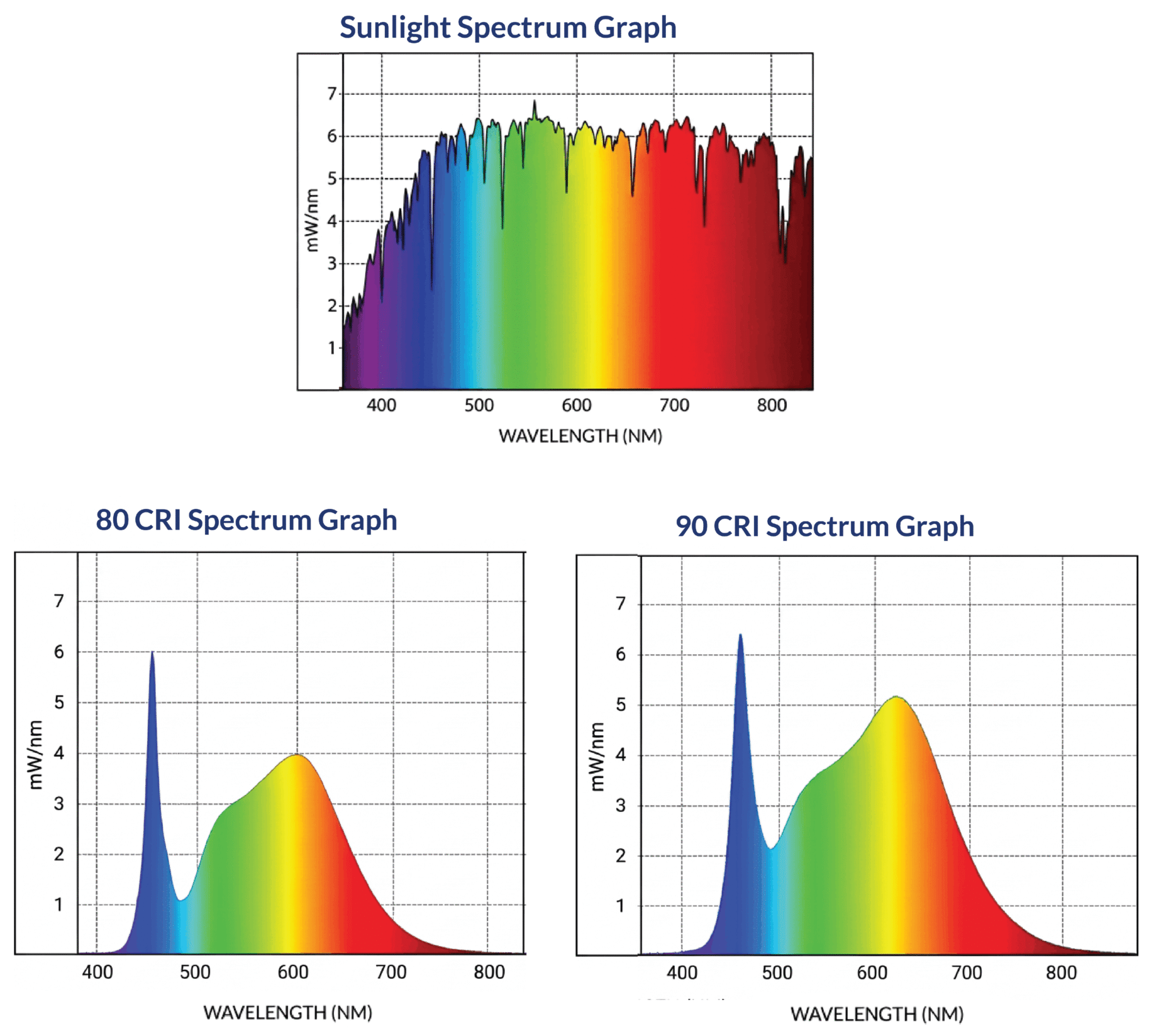
On a spectrograph, standard white LEDs reveal a major flaw: a sharp spike in blue wavelengths caused by their underlying blue emitter chip, followed by deep drops in cyan and red. This aggressive blue peak can cause visual strain and distort subtle colors. High-CRI LEDs resolve this conundrum by using advanced phosphors that suppress the blue spike and fill in spectral gaps, producing a smoother output closer to daylight.
Selecting the wrong CRI often leads to downstream customer complaints. An incorrect rating can make retail products of fresh produce look unappealing. Understanding the difference between general and high-CRI lighting prevents costly installation mistakes.
Interested in Industrial Lights with 80CRI or 90CRI?